 MeterPilot
kW vs kWh: Power and Electricity Units Explained Without Jargon
Understand the difference between an appliance’s power at a moment and the energy accumulated over time, with practical meter and bill examples.
The short answer
Kilowatts (kW) describe power at a moment. Kilowatt-hours (kWh) describe energy accumulated over time. A 2 kW heater running for half an hour uses about 1 kWh; the same heater running for three hours uses about 6 kWh.
Your electricity meter normally accumulates kWh. Your bill normally charges for kWh over a billing interval. An appliance label often lists watts or kilowatts, which is its power rating—not the number of units it will use every day.
The relationship in one line
Energy (kWh) = power (kW) × time (hours)
If a device is rated in watts, divide by 1,000 first:
Energy (kWh) = watts × hours ÷ 1,000
The US Department of Energy uses the same wattage-times-hours relationship in its energy education material. Real appliances can cycle, change modes, or draw less than their nameplate maximum, so the formula is an estimate unless power is measured.
Three examples that make the difference clear
| Appliance pattern | Calculation | Approximate energy |
|---|---|---|
| 1.5 kW iron for 20 minutes | 1.5 × 0.333 h | 0.5 kWh |
| 100 W fan for 10 hours | 0.1 × 10 h | 1 kWh |
| 5 W standby load for 24 hours | 0.005 × 24 h | 0.12 kWh |
The first device has high power but runs briefly. The fan has lower power but runs much longer. A tiny standby load can still accumulate energy because it is present all day.
Why the meter number looks much larger
A cumulative meter might display 18,742 kWh. That is not today's usage. It is the register total since installation, reset, or another defined starting event.
If it displays 18,742 on Monday and 18,756 on Thursday, the interval usage is:
18,756 − 18,742 = 14 kWh
Keep both readings and both timestamps. Recording only “14 units” loses the evidence needed to verify the calculation later.
Common mix-ups
- Treating a 3 kW appliance as if it always uses 3 kWh each day.
- Entering interval usage where an app or provider asks for the cumulative reading.
- Comparing a live kW value with a monthly kWh total.
- Multiplying kWh by time again even though time is already part of the unit.
- Assuming a bill amount should move in direct proportion to kWh while ignoring fixed charges, tariffs, taxes or adjustments.
A useful way to record it
Record the cumulative kWh value from the correct meter register. Let the difference between dated readings describe interval usage. If you are testing an appliance, note when it started, how long it ran, and what other loads or weather conditions changed.
This keeps three separate facts intact: the meter reading, the calculated usage, and any explanation you are investigating.
Frequently asked questions
Is one electricity “unit” one kWh?
In many billing contexts, yes, but confirm the unit printed on your meter and bill. A multiplier or multiple register may affect the provider calculation.
Is kW the same as kWh per hour?
Power in kW is already the rate at which energy is being used. Saying “kWh per hour” can simplify to kW, but it often makes everyday explanations harder rather than clearer.
Can a meter show both?
Some digital meters rotate through cumulative kWh, live power, voltage, current and diagnostic screens. Use the display label and provider instructions; do not choose a number because it happens to be largest.
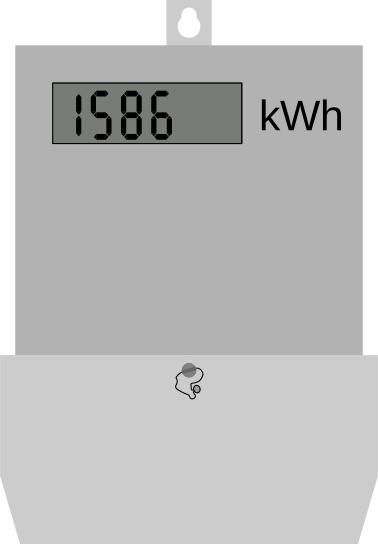

Record the register first. Interpret it second.
MeterPilot separates cumulative readings from interval usage, helping you avoid the most common unit and date mistakes.
See the MeterPilot workflow